Published on February 22, 2025
Citizen Scientists: The Unsung Heroes of Wildlife Conservation
How everyday volunteers are revolutionizing conservation efforts through wildlife cameras, bird counts, and habitat surveys
In the quiet hours before dawn, Sarah Martinez adjusts her camera trap along a forest trail in the Santa Monica Mountains. She's not a professional biologist or park ranger—she's a high school teacher who dedicates her weekends to wildlife conservation. Sarah is part of a growing movement of citizen scientists whose contributions are proving invaluable to conservation efforts worldwide.
Citizen science represents a powerful democratization of conservation work, enabling ordinary people to contribute meaningful data that shapes wildlife protection strategies. From tracking migratory bird patterns to monitoring endangered species populations, these volunteers are filling critical gaps in scientific knowledge while fostering deeper connections between communities and the natural world they're working to protect.
The Power of Collective Observation
Traditional wildlife research has always been constrained by limited resources—too few researchers covering too much ground. Citizen scientists are changing this equation dramatically. Through coordinated efforts, volunteers can monitor vast geographical areas simultaneously, creating datasets of unprecedented scale and scope.
Wildlife camera trapping programs exemplify this collaborative approach. Volunteers like Sarah install and maintain motion-activated cameras in strategic locations, capturing thousands of images of elusive wildlife. These cameras operate 24/7, documenting animal behavior, population dynamics, and habitat use patterns that would be impossible for professional researchers to observe alone.
The data collected through these efforts has led to remarkable discoveries. In California's coastal regions, citizen scientists documented the return of mountain lions to areas where they hadn't been seen in decades. In the Midwest, volunteer camera trappers identified critical wildlife corridors that informed highway planning and prevented habitat fragmentation. Each photograph, each observation, contributes to a larger understanding of ecosystem health and species survival.
Bird counting initiatives represent another cornerstone of citizen science. The annual Christmas Bird Count, now in its 125th year, engages tens of thousands of volunteers across North America. Participants spend a single day counting every bird they see or hear within designated areas. This massive coordinated effort generates critical data on bird population trends, range shifts, and the impacts of climate change on avian species.
"Citizen scientists aren't just collecting data—they're becoming advocates for the wildlife they monitor. When you spend hours observing a species, you develop a personal investment in its survival."
— Dr. Elena Rodriguez, Conservation Biologist
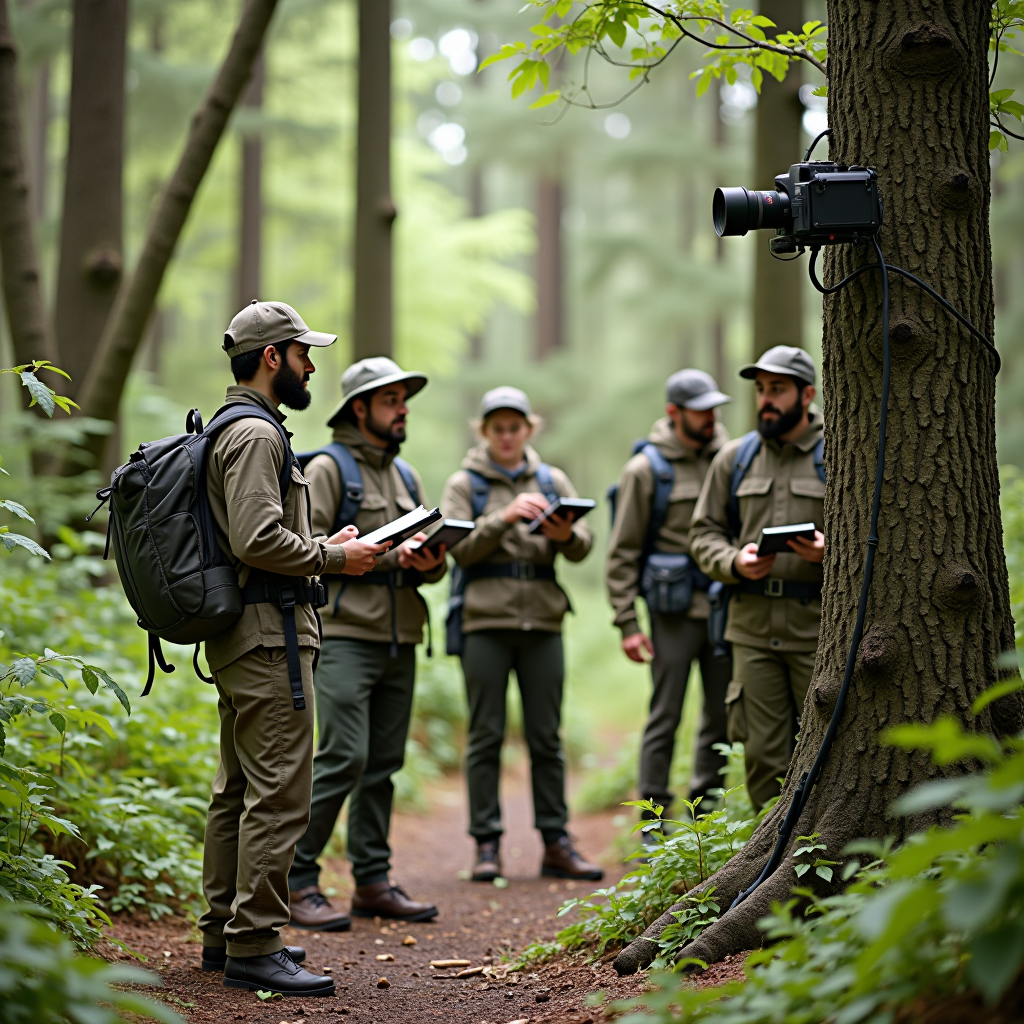
Local volunteers conducting a habitat survey as part of a regional conservation monitoring program
Success Stories from the Field
The impact of citizen science extends far beyond data collection. These programs are achieving tangible conservation victories that demonstrate the power of community engagement in environmental protection.
In the Pacific Northwest, a network of volunteer stream monitors has been tracking salmon populations for over fifteen years. Their meticulous observations of water quality, temperature, and fish counts have identified critical spawning habitats and pollution sources. This data directly influenced the restoration of three major watersheds, resulting in a 40% increase in returning salmon populations. The volunteers didn't just collect numbers—they became stewards of their local waterways, organizing cleanup efforts and advocating for protective legislation.
The story of the monarch butterfly migration illustrates another triumph of citizen science. Volunteers across North America participate in tagging programs, carefully capturing, marking, and releasing monarchs during their epic journey to Mexico. Over decades, this volunteer network has mapped migration routes, identified critical stopover habitats, and documented the devastating 90% population decline. Their work galvanized conservation action, leading to the protection of milkweed corridors and the establishment of monarch waystations in communities nationwide.
Closer to home, our own Rancho SMC citizen science program has achieved remarkable results. Local volunteers conducting monthly habitat surveys documented the presence of several endangered species previously thought to be locally extinct. Their observations of California red-legged frogs in restored wetlands confirmed that habitat rehabilitation efforts were succeeding. Volunteer bird counters identified the ranch as a critical stopover site for migratory songbirds, leading to enhanced habitat management practices that have increased bird diversity by 35% over three years.
The Science Behind Citizen Science
Skeptics sometimes question whether volunteer-collected data can match the rigor of professional research. The answer, supported by numerous peer-reviewed studies, is a resounding yes—when programs are properly designed and volunteers receive adequate training.
Successful citizen science programs incorporate several key elements that ensure data quality. Standardized protocols provide clear, step-by-step instructions for observations and measurements. Training sessions teach volunteers proper identification techniques, data recording methods, and the importance of consistency. Quality control measures, including expert review of submitted data and periodic validation studies, maintain scientific standards while respecting volunteer contributions.
Modern technology has dramatically enhanced citizen science capabilities. Smartphone apps enable instant data submission with GPS coordinates and timestamps. Artificial intelligence assists with species identification, providing real-time feedback to volunteers. Online platforms facilitate collaboration, allowing participants to share observations, ask questions, and learn from experienced naturalists. These tools don't replace human observation—they amplify it, making citizen science more accessible and impactful than ever before.
The scientific community increasingly recognizes citizen science as a legitimate and valuable research methodology. Major conservation organizations, government agencies, and academic institutions now incorporate volunteer-collected data into their research programs. Publications in prestigious scientific journals regularly feature studies based on citizen science data, validating the contributions of thousands of volunteers worldwide.
Getting Involved: Practical Steps for Aspiring Citizen Scientists
The beauty of citizen science lies in its accessibility. You don't need advanced degrees or expensive equipment to make meaningful contributions to wildlife conservation. Here's how to begin your journey as a citizen scientist.
Start with Your Interests
Choose projects that align with your passions and schedule. Bird enthusiasts might join local Audubon Society counts or contribute to eBird, a global database of bird observations. Those interested in marine life can participate in beach cleanups that document ocean debris and its impact on wildlife. Plant lovers can monitor phenology—the timing of seasonal events like flowering and leaf emergence—which provides crucial data on climate change impacts.
Invest in Basic Equipment
Most citizen science projects require minimal investment. A field notebook, binoculars, and a smartphone with a camera cover the basics for many programs. As you develop expertise, you might add field guides, a hand lens for close-up observations, or specialized equipment like water testing kits. Many programs provide equipment loans or group purchases to reduce individual costs.
Commit to Training
Take advantage of training opportunities offered by citizen science programs. These sessions teach essential skills like species identification, proper data collection techniques, and safety protocols. Online courses and webinars make training accessible regardless of location. The time invested in learning proper methods ensures your contributions will be scientifically valuable.
Be Consistent and Patient
The most valuable citizen science contributions come from sustained, regular observations. Commit to a schedule you can maintain—whether that's weekly bird counts, monthly habitat surveys, or seasonal camera trap checks. Consistency matters more than intensity. Long-term datasets reveal trends and patterns that short-term studies miss. Remember that wildlife observation requires patience. Not every outing will yield exciting discoveries, but every data point contributes to the larger picture.
Connect with Community
Join local naturalist groups, conservation organizations, or online citizen science communities. These connections provide support, answer questions, and enhance your learning. Experienced volunteers often mentor newcomers, sharing identification tips and favorite observation locations. The social aspect of citizen science transforms solitary nature walks into collaborative conservation efforts.
The Ripple Effect: Beyond Data Collection
The impact of citizen science extends far beyond the data collected. These programs create ripple effects that strengthen conservation efforts in unexpected ways.
Participants develop environmental literacy that transforms their relationship with nature. Learning to identify bird calls or track animal signs cultivates observational skills and ecological understanding. This knowledge spreads through families and communities as citizen scientists share their discoveries and enthusiasm. Children who accompany parents on surveys often develop lifelong conservation values.
Citizen scientists become powerful advocates for wildlife protection. When volunteers invest time observing and documenting species, they develop personal connections to conservation issues. These informed advocates contact elected officials, attend public hearings, and support conservation initiatives with credibility earned through direct experience. Their testimony carries weight because it's grounded in systematic observation rather than abstract concern.
The economic value of citizen science contributions is staggering. Volunteer hours represent millions of dollars in equivalent professional labor. This volunteer workforce enables conservation organizations to accomplish far more than their budgets would otherwise allow. Studies estimate that citizen science programs generate data worth tens of millions of dollars annually while fostering public engagement that money cannot buy.
Challenges and Future Directions
Despite remarkable successes, citizen science faces ongoing challenges that require attention and innovation. Ensuring diverse participation remains a priority. Many programs struggle to engage underrepresented communities, limiting both the geographic scope of data collection and the democratization of conservation work. Addressing barriers like transportation, equipment costs, and language accessibility will strengthen citizen science's reach and impact.
Data management presents technical challenges as citizen science programs generate enormous datasets. Developing user-friendly platforms that handle data submission, quality control, and analysis requires ongoing investment in technology infrastructure. Balancing accessibility for volunteers with scientific rigor demands careful program design and continuous improvement.
The future of citizen science looks promising as technology continues to evolve. Artificial intelligence and machine learning will enhance species identification and data analysis. Virtual reality might enable remote participation in field surveys. Satellite imagery and drone technology could expand the scope of volunteer monitoring efforts. These innovations will amplify rather than replace human observation, creating new opportunities for meaningful public engagement in conservation.
Join Our Citizen Science Community
Rancho SMC offers multiple opportunities for volunteers to contribute to wildlife conservation through camera trapping, bird surveys, and habitat monitoring programs.
Training sessions are held monthly, and no prior experience is required. Your observations can make a real difference in protecting local wildlife.
As Sarah Martinez packs up her camera equipment at the end of another monitoring session, she reflects on her journey as a citizen scientist. "I started this thinking I'd just be collecting data," she says. "But I've become part of something much bigger—a community of people who care deeply about wildlife and are willing to invest their time to protect it. Every image my cameras capture, every species I document, contributes to conservation decisions that will protect these animals for future generations."
Her experience embodies the transformative power of citizen science. By democratizing conservation work, these programs create a more engaged, informed, and effective environmental movement. The data collected by volunteers fills critical knowledge gaps, but perhaps more importantly, citizen science cultivates a generation of conservation advocates with personal stakes in protecting wildlife.
The future of wildlife conservation depends not just on professional scientists and conservation organizations, but on the collective efforts of ordinary people who choose to observe, document, and advocate for the natural world. Citizen scientists are proving that everyone has a role to play in protecting endangered species and preserving biodiversity. Their contributions remind us that conservation is not a spectator sport—it's a collaborative effort that welcomes all who care enough to participate.
This article is part of our ongoing series highlighting innovative approaches to wildlife conservation and community engagement in environmental protection.